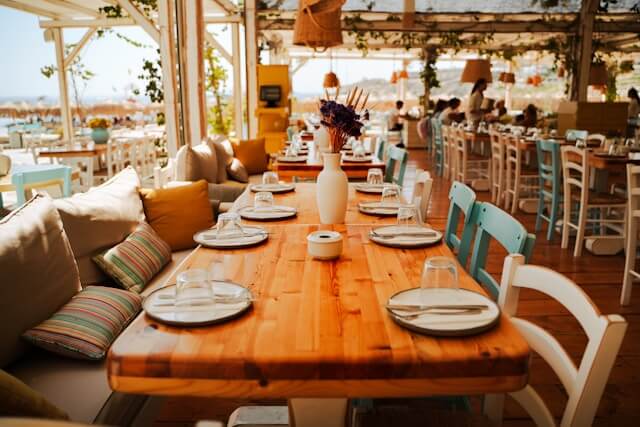
A restaurant's hardest problem isn't getting people through the door once — it's the six weeks of silence afterwards. Most churn in a restaurant is invisible: nobody complains, nobody cancels; a table that used to book monthly just… stops.
A loyalty card gives you two things against that silence: a reason for diners to come back sooner, and — because every visit is scanned — a record that tells you when a good customer's rhythm breaks. This guide covers the mechanics that fit restaurant service, and the numbers worth watching.
Restaurant loyalty is a different game than coffee
A café regular visits daily; a restaurant regular, monthly. Fewer visits mean each one carries more weight — and a single skipped cycle is a real revenue signal, not noise. Industry estimates often suggest that even a small improvement in repeat-visit rate has an outsized effect in full service, because the average ticket is high. Treat any such figure as an estimate — but the logic holds: one extra visit a year from each of your regulars is worth real money.
The mechanic has to fit service, too. Nobody wants to fumble a paper card while settling a dinner bill. A pass in the wallet, scanned once at payment, does fit.
How the card works at the table
Joining is one scan. A QR code on the bill holder, the counter or the menu; the card lands in Apple Wallet or Google Wallet. No app, no sign-up friction at the table.
Stamping is one more. Staff scan the guest's pass when the bill is settled — two seconds, no POS change.
The reward is yours to shape. A free dessert every 5 visits, a set discount on the 10th — whatever fits your margins.
The visit data most restaurants never see
Reservation books and POS reports tell you what was sold, not who came back. Once visits are scanned, the picture changes:
Visit cadence. How often your regulars actually return — monthly? every six weeks? — instead of a guess.
Day-part mix. Whether a member is a lunch regular, a weekend-dinner guest, or both. Those are different audiences for different offers.
The gone-quiet list. Members whose usual rhythm has lapsed — the churn you'd otherwise discover months later, as a slow quarter.
Campaign effect. Did the weekday-dinner promotion actually move visits, or just discount the people who were coming anyway?
Kardly counts visits, not covers or revenue — no POS integration required, and no invented dollar figures. Where this guide mentions money, it's estimate arithmetic you can redo with your own average ticket.
Six mechanics that fit restaurant service
Visit stamps with a mid-tier reward. A free dessert at 5 visits keeps the loop short enough to feel reachable; a bigger reward at 10 keeps it going.
Weekday boost. Double stamps Monday to Wednesday evenings aim your loyal crowd at the covers you actually need to fill.
Birthday table. A dessert or an aperitif in the birthday week — the most natural restaurant excuse for a return visit.
Lunch loop. If you serve an office crowd, a shorter lunch-specific loop (5 visits) matches their weekly rhythm.
Referral. A stamp when a member brings a first-timer who joins — word of mouth, but countable.
Win-back. When the dashboard shows a monthly regular at eight weeks of silence, a personal "we miss you" with a small incentive beats a generic blast.
Set it up before Friday service
Design the card. Logo, colors, the reward rule. Ten minutes, self-serve.
Print the QR where the bill gets settled. Bill holders, the counter, receipts.
Brief the team. One scan when the guest pays. That's the entire workflow change.
Watch the first month. Members, visits and redemptions come in on their own.
Measure it honestly
After six to eight weeks, look at three things: members joined, the share of members with two or more visits, and the average gap between visits. If that gap shortens, the program is working — that's the whole game in one number.
Some estimate arithmetic to make it concrete: if your average table is €40 and a regular visits ten times a year, shortening their cycle by even one visit is roughly €40 times the number of regulars it touches. An estimate, of course — but the kind you can check against your own dashboard within a quarter.
Frequently asked questions
Will this slow down service?
One scan at payment, about two seconds — comparable to handing back a card machine. There's no terminal and no POS integration to install.
Do guests need to download an app?
No. The card goes straight into Apple Wallet or Google Wallet from a QR code — wallets their phones already have.
Does it work for both lunch and dinner?
Yes — and the dashboard will show you which of your members are lunch regulars, dinner guests or both, which is exactly the information you need to aim offers.
What does it cost?
You can design the card and go live the same day, self-serve — no demo call. Current plans are on the pricing page.
Silence isn't loyalty. Give your regulars a card in their wallet — and give yourself the visit data to notice when they need a reason to come back.